
Spicy Korean Bbq Chicken Veggie Bowls
Oh my goodness, get ready to find your new favorite weeknight dinner! I am so incredibly excited to share these Spicy Korean Bbq Chicken Veggie Bowls with you. What makes this recipe so special, you ask? Well, it’s a vibrant, flavor-packed explosion that brings all the best parts of Korean BBQ right into your kitchen, without needing a grill or a ton of fuss. I promise you’ll absolutely love how easily this comes together and how unbelievably delicious it tastes!
I’ve crafted this dish to be the ultimate comforting yet exciting meal. Imagine tender pieces of chicken, marinated in a rich, savory, and perfectly spicy Korean BBQ sauce (using delicious non-alcohol alternatives, of course!), then roasted to perfection alongside a beautiful medley of crisp-tender vegetables. We’re talking about a healthy, wholesome, and incredibly satisfying bowl that’s bursting with vibrant colors and bold flavors. It’s like a mini culinary vacation in every bite – warm, hearty, and just spicy enough to make your taste buds sing. Plus, it’s a fantastic way to get a ton of veggies into your diet without even realizing it. Trust me, this one is a keeper!

Ingredient Notes
Creating delicious Spicy Korean BBQ Chicken Veggie Bowls starts with the right ingredients, and I love how versatile this dish can be! Here’s a breakdown of what you’ll need and some helpful substitutions.
- Chicken: For the most tender and flavorful experience, I always reach for boneless, skinless chicken thighs. They stay incredibly juicy and absorb the marinade beautifully. You can certainly use boneless, skinless chicken breasts if you prefer, just be mindful that they might cook a little faster and can dry out if overcooked. If you’re looking for a vegetarian alternative, firm tofu or tempeh would also work wonderfully, just press them well before marinating.
- Spicy Korean BBQ Marinade Base:
- Gochujang: This is the heart of our spicy Korean flavor! Gochujang is a savory, sweet, and spicy fermented chili paste that gives the chicken its signature taste and vibrant red color. There isn’t a direct substitute, but if you absolutely can’t find it, a mix of red miso paste, Sriracha, a touch of sugar, and a pinch of cayenne could offer a distant approximation, though the fermented depth will be missing.
- Gochugaru (Korean Chili Flakes): These flakes add an extra layer of heat and a beautiful hue without overwhelming the dish. You can adjust the amount to suit your spice preference. If unavailable, regular chili flakes will work, but they tend to be spicier and lack the unique smoky-sweet notes of gochugaru.
- Soy Sauce: The essential umami foundation. I usually opt for low-sodium soy sauce to better control the saltiness. For a gluten-free version, tamari is an excellent substitute.
- Non-Alcoholic Alternative: Traditional Korean marinades often use rice wine or mirin. To keep this recipe accessible and non-alcoholic, I use a combination of rice vinegar and a pinch of sugar. A small amount of apple juice can also provide a similar fruity sweetness and tenderizing effect.
- Toasted Sesame Oil: This ingredient adds a wonderfully nutty, aromatic depth that truly completes the Korean flavor profile. Make sure it’s toasted sesame oil for maximum impact.
- Sweetener: Brown sugar is my go-to for its molasses notes, which complement the gochujang. Honey or maple syrup are also great alternatives if you prefer.
- Fresh Aromatics: Plenty of freshly grated garlic and ginger are crucial for a vibrant, pungent marinade. Don’t skimp on these; they bring so much fresh flavor.
- Optional Tenderizer: For an even more authentic touch, you can add about 2 tablespoons of grated Asian pear or apple puree to the marinade. It naturally tenderizes the chicken and adds a subtle sweetness.
- Vegetables for the Bowls: This is where you can truly customize! I love a colorful mix.
- Bell Peppers: Red, yellow, and orange bell peppers sliced into strips add sweetness and crunch.
- Carrots: Matchstick or thinly sliced carrots contribute a nice texture and color.
- Zucchini or Cucumber: Sliced zucchini works well cooked or raw. If using cucumber, add it fresh for crunch.
- Mushrooms: Sliced cremini or shiitake mushrooms add an earthy depth.
- Spinach or Bok Choy: Lightly sautéed spinach or baby bok choy adds a fresh, green element.
- Other Ideas: Broccoli florets, snap peas, edamame, or even blanched bean sprouts are fantastic additions.
- Base: Fluffy, warm rice is the perfect canvas for our bowls. White rice (like jasmine or basmati), brown rice, or even quinoa are all excellent choices.
- Garnishes: Don’t forget the finishing touches! Toasted sesame seeds and thinly sliced green onions add both visual appeal and a burst of flavor. A drizzle of extra sesame oil or a sprinkle of flaky sea salt can also elevate the dish.
Step-by-Step Instructions
Let’s get cooking! These bowls are surprisingly straightforward to put together, and the payoff in flavor is huge. I usually follow these steps for the best results:
- Prepare the Chicken and Marinade:
- First, I grab my boneless, skinless chicken thighs (about 1.5 lbs) and pat them really dry with paper towels. This helps the marinade adhere better. Then, I slice them into bite-sized pieces, roughly 1-inch chunks, so they cook quickly and evenly.
- In a medium bowl, I whisk together all the marinade ingredients: 3-4 tablespoons gochujang, 1-2 tablespoons gochugaru (adjust to your spice preference!), 1/4 cup soy sauce, 2 tablespoons non-alcoholic alternative (like rice vinegar with a pinch of sugar or apple juice), 1 tablespoon toasted sesame oil, 2 tablespoons brown sugar (or honey), 4-5 cloves of minced garlic, and 1 tablespoon of freshly grated ginger. If I have it, I’ll also add 2 tablespoons of grated Asian pear for extra tenderness.
- I add the chicken pieces to the marinade, toss them thoroughly to ensure every piece is coated, cover the bowl, and refrigerate. I aim for at least 30 minutes, but 2-4 hours is ideal, and overnight marinating really deepens the flavor.
- Prep Your Veggies:
- While the chicken is marinating, I get all my vegetables ready. I wash and chop my chosen veggies: slice bell peppers, matchstick carrots, thinly slice zucchini and mushrooms, and prepare any leafy greens like spinach or bok choy. Having everything prepped makes the cooking process smooth.
- Cook the Rice:
- I start my rice according to package directions, whether it’s white or brown rice. I want it ready and warm when the chicken and veggies are done.
- Cook the Chicken:
- When I’m ready to cook, I heat a large skillet or cast-iron pan over medium-high heat with a tablespoon of neutral oil (like canola or vegetable oil). If I’m grilling, I preheat my grill to medium-high.
- Once the pan is hot, I add the marinated chicken in a single layer, making sure not to overcrowd the pan. I might cook it in two batches if necessary. Overcrowding will steam the chicken instead of giving it a nice sear.
- I cook the chicken for 3-5 minutes per side, or until it’s beautifully browned, slightly charred at the edges, and cooked through. If using a grill, I grill for 2-4 minutes per side. I always ensure the internal temperature reaches 165°F (74°C).
- Once cooked, I remove the chicken from the pan and set it aside.
- Cook the Vegetables:
- Using the same skillet (no need to clean it; the leftover marinade bits add flavor!), I add a little more oil if needed and sauté the harder vegetables first, like carrots and bell peppers, for 3-4 minutes until they start to soften slightly but still have a bit of crispness.
- Then, I add the softer vegetables like zucchini and mushrooms, and cook for another 2-3 minutes. If I’m using spinach or bok choy, I add it last and just wilt it for 1-2 minutes until tender-crisp. I want the vegetables to be vibrant and not mushy.
- Assemble the Bowls:
- Now for the best part – building those beautiful bowls! I spoon a generous portion of warm rice into each bowl.
- Next, I arrange the cooked Korean BBQ chicken over the rice.
- Then, I artfully add the sautéed vegetables around the chicken.
- Finally, I garnish generously with toasted sesame seeds and fresh green onions. Sometimes, I’ll even add a fried egg with a runny yolk on top, or a spoonful of kimchi for an extra tangy kick. Serve immediately and enjoy!
Tips & Suggestions
Over the years, I’ve learned a few tricks to make these Spicy Korean BBQ Chicken Veggie Bowls even more amazing. Here are my favorite tips for you:
- Marination Time is Key: While 30 minutes will get you some flavor, I highly recommend marinating the chicken for at least 2-4 hours. If you can plan ahead, marinating overnight (up to 24 hours) will yield the most tender and flavorful chicken. The longer it sits, the more those amazing Korean flavors penetrate the meat.
- Adjust the Spice Level: Don’t be shy about customizing the heat! If you love extra spice, add more gochujang or gochugaru to the marinade. If you prefer it milder, reduce the gochugaru and perhaps slightly lessen the gochujang, replacing some with a bit more soy sauce or brown sugar for balance.
- Perfect the Sear: For that irresistible charred flavor on your chicken, make sure your skillet is nice and hot before adding the chicken. Don’t overcrowd the pan; cook in batches if necessary. This allows the chicken to sear and brown beautifully rather than steam. If grilling, ensure your grates are clean and well-oiled.
- Keep Veggies Crisp-Tender: I love my vegetables with a bit of bite! When sautéing, cook them just until they are tender-crisp. Overcooking can make them watery and lose their vibrant color and texture. Adding them in stages (harder veggies first, then softer ones) helps achieve this.
- Meal Prep Power: These bowls are fantastic for meal prepping! You can cook the chicken, rice, and vegetables separately. Store them in individual containers, and then assemble your bowls fresh before eating. This keeps everything in its prime condition.
- Garnish Galore: Don’t underestimate the power of garnishes! Toasted sesame seeds and fresh green onions are a must for me. For an extra layer of richness and flavor, try topping your bowl with a perfectly fried egg (runny yolk, please!), a drizzle of extra gochujang, a sprinkle of fresh cilantro, or even a dollop of ssamjang (a Korean dipping sauce).
- Serving Suggestions: To truly round out the Korean experience, serve your bowls with a side of kimchi (fermented spicy cabbage) or quick pickled radishes. The tanginess and crunch provide a wonderful contrast to the savory, spicy chicken.
- Vary Your Vegetables: Feel free to experiment with whatever vegetables are in season or you have on hand. Broccoli, snap peas, edamame, bok choy, or even thinly sliced cabbage can all be delicious additions. Roasting your vegetables instead of sautéing is also a great option for a different texture and flavor profile.
Storage
Having leftover Spicy Korean BBQ Chicken Veggie Bowls is a true win for future meals! Here’s how I typically store them to keep everything fresh and delicious:
- Refrigeration:
- Separate Components: For the best quality and to prevent the rice from becoming soggy, I highly recommend storing the cooked chicken, cooked vegetables, and rice in separate airtight containers in the refrigerator.
- Assembled Bowls: If you’ve already assembled your bowls, they can still be stored in an airtight container. However, be aware that the textures of the rice and some vegetables might soften a bit more.
- Duration: Cooked chicken and vegetables will stay fresh for up to 3-4 days when properly stored in the refrigerator. The rice is best consumed within 2-3 days.
- Freezing:
- Cooked Chicken: The cooked Korean BBQ chicken freezes very well! Once it has cooled completely, I transfer it to an airtight, freezer-safe container or a heavy-duty freezer bag. It can be frozen for up to 2-3 months. Thaw overnight in the refrigerator before reheating.
- Vegetables: Cooked vegetables can be frozen, but their texture might change significantly, becoming softer and a bit watery upon thawing. For this reason, I generally don’t freeze the cooked veggies, preferring to cook a fresh batch if needed.
- Assembled Bowls: I do not recommend freezing fully assembled bowls, as the rice and vegetables will likely become mushy and lose their appeal after thawing and reheating.
- Reheating:
- Microwave: This is my go-to for convenience. If reheating an assembled bowl or separate components, I place them in a microwave-safe dish, cover lightly, and heat for 1-2 minutes, stirring halfway through, until thoroughly warmed. For chicken, sometimes adding a tablespoon of water or broth helps keep it moist.
- Stovetop: For the chicken and vegetables, you can reheat them in a skillet over medium heat with a tiny splash of water or oil. This method helps restore some of the texture and prevents the chicken from drying out.
- Rice: For best results, I often reheat rice with a sprinkle of water in the microwave or a covered saucepan to bring back its fluffiness.
- Food Safety: Always ensure that any leftovers are cooled rapidly (within 2 hours) before storing them in the refrigerator. Reheat thoroughly to an internal temperature of 165°F (74°C) to ensure they are safe to eat. Avoid reheating more than once.
Final Thoughts
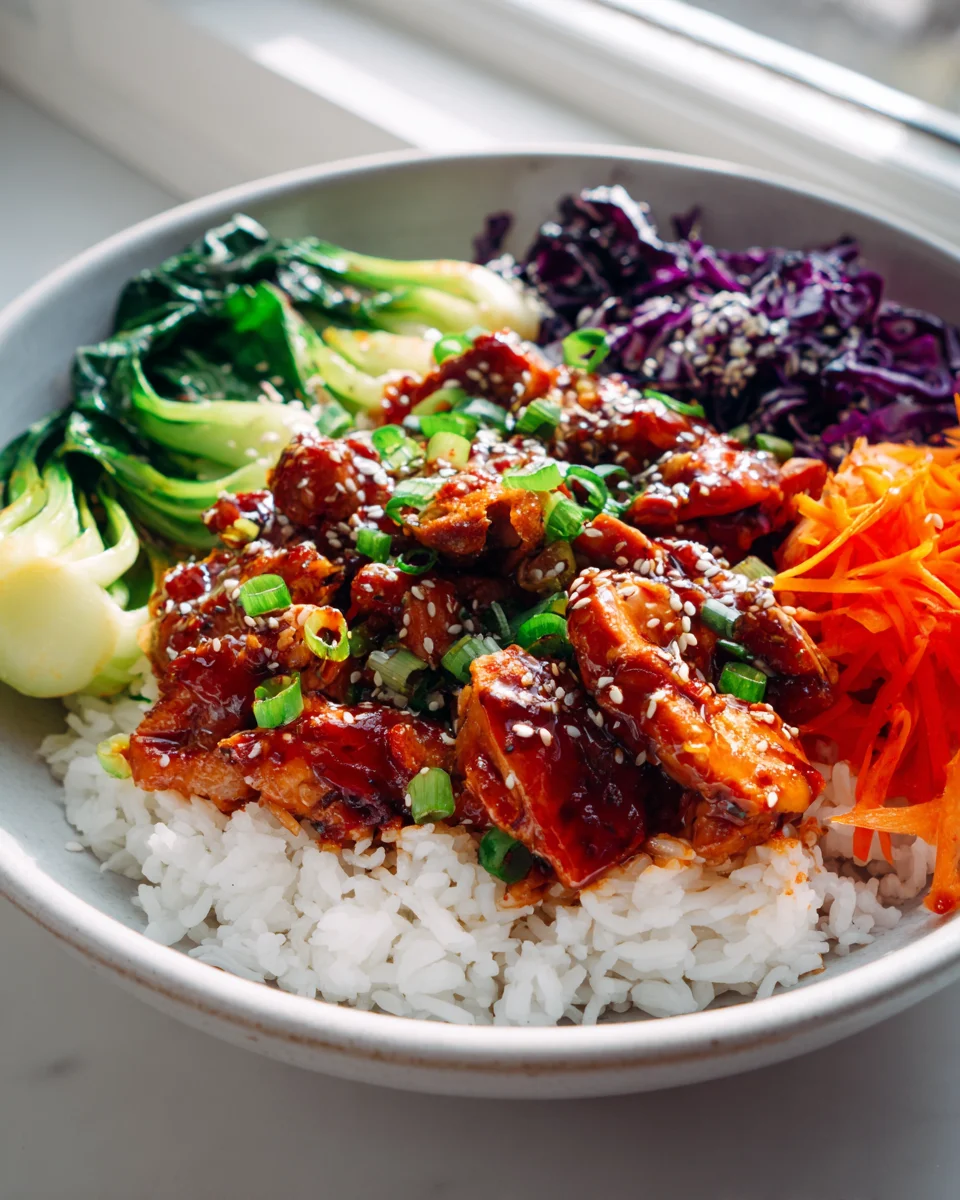
And there you have it! We’ve journeyed through layers of flavor to create your incredible Spicy Korean Bbq Chicken Veggie Bowls. I genuinely believe this recipe is a true game-changer for anyone craving a meal that’s both exciting and nourishing. The way the succulent chicken, marinated in that unforgettable spicy Korean BBQ sauce (crafted with all the delicious non-alcohol alternatives!), harmonizes with the crisp, vibrant veggies is just pure magic. It’s a complete meal in a bowl, bursting with bold, umami-rich flavors that make every forkful an absolute delight. Whether you’re whipping it up for a quick weeknight dinner or prepping healthy lunches, I promise these bowls will become a firm favorite. Get ready to savor every spicy, savory, satisfying bite!
Spicy Korean BBQ Chicken Veggie Bowls: Easy & Delicious
- Total Time: 45 minutes
- Yield: 4 servings 1x
Description
These Spicy Korean BBQ Chicken Veggie Bowls are a vibrant, flavor-packed explosion that brings all the best parts of Korean BBQ right into your kitchen. Enjoy tender marinated chicken roasted alongside a medley of crisp-tender vegetables for a healthy and satisfying meal.
Ingredients
- 1.5 lbs boneless, skinless chicken thighs
- 3–4 tablespoons gochujang
- 1–2 tablespoons gochugaru (Korean chili flakes)
- 1/4 cup soy sauce
- 2 tablespoons non-alcoholic alternative (like rice vinegar with a pinch of sugar or apple juice)
- 1 tablespoon toasted sesame oil
- 2 tablespoons brown sugar (or honey)
- 4–5 cloves minced garlic
- 1 tablespoon freshly grated ginger
- 2 tablespoons grated Asian pear (optional)
- Bell peppers (red, yellow, and orange), sliced into strips
- Carrots, matchstick or thinly sliced
- Zucchini or cucumber, sliced
- Sliced cremini or shiitake mushrooms
- Spinach or baby bok choy, lightly sautéed
- Fluffy warm rice (white rice like jasmine or basmati, brown rice, or quinoa)
- Toasted sesame seeds
- Thinly sliced green onions
- Extra sesame oil or flaky sea salt (optional)
Instructions
- Prepare the Chicken and Marinade: Pat the chicken thighs dry and slice them into bite-sized pieces. In a medium bowl, whisk together the marinade ingredients and add the chicken, tossing to coat. Cover and refrigerate for at least 30 minutes, ideally 2-4 hours or overnight.
- Prep Your Veggies: While the chicken is marinating, wash and chop the vegetables: slice bell peppers, matchstick carrots, thinly slice zucchini and mushrooms, and prepare leafy greens.
- Cook the Rice: Start cooking the rice according to package directions so it's ready when the chicken and veggies are done.
- Cook the Chicken: Heat a large skillet or cast-iron pan over medium-high heat with neutral oil. Add the marinated chicken in a single layer and cook for 3-5 minutes per side until browned and cooked through. Remove from the pan and set aside.
- Cook the Vegetables: In the same skillet, sauté the harder vegetables first for 3-4 minutes, then add the softer vegetables and cook for another 2-3 minutes. Add leafy greens last and wilt for 1-2 minutes.
- Assemble the Bowls: Spoon warm rice into each bowl, arrange the cooked chicken over the rice, add sautéed vegetables around the chicken, and garnish with toasted sesame seeds and green onions. Optionally, add a fried egg or kimchi.
- Prep Time: 15 mins
- Cook Time: 30 mins
- Category: Dinner
- Method: Sautéing
- Cuisine: Korean
Nutrition
- Serving Size: 1 bowl
- Calories: 550
- Sugar: 10 g
- Sodium: 800 mg
- Fat: 20 g
- Saturated Fat: 3 g
- Unsaturated Fat: 15 g
- Trans Fat: 0 g
- Carbohydrates: 70 g
- Fiber: 5 g
- Protein: 30 g
- Cholesterol: 100 mg
Keywords: Marinate the chicken for at least 2-4 hours for the best flavor. Adjust the spice level by modifying the amount of gochujang and gochugaru. Keep vegetables crisp-tender by cooking them just until they are tender-crisp.
Leave a Comment